
Éco-entrepreneur · Laurentians
The mission of an Éco-entrepreneur
Every detail makes a difference.
Éco-entrepreneur
A shift that starts with the very first sketches.
Making a sustainable shift is not yet within everyone’s reach, but more and more people in Québec are choosing it. It starts with rethinking our consumption habits: reuse, product durability, circularity — in short, respect for the environment.
In building, it is the sum of many small details that makes the difference. Applying a few sustainable principles from the very first sketches is enough to move toward an optimal design.
Our approach
Designed for your site.
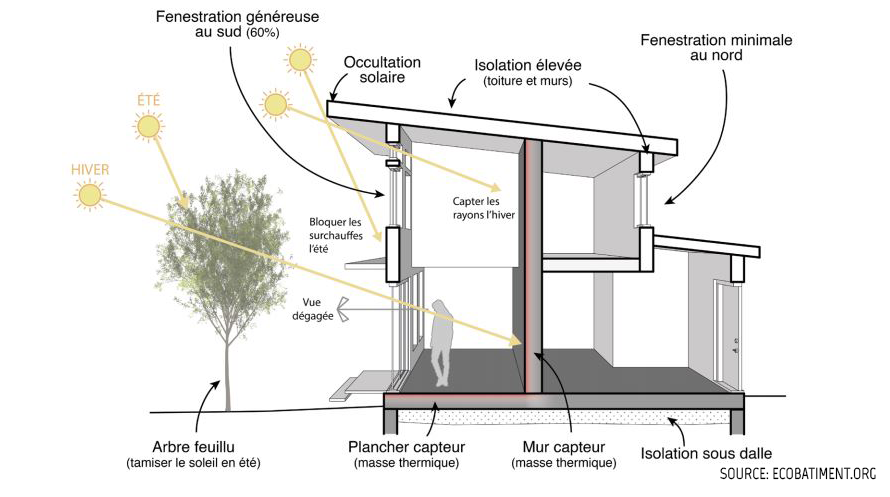
Meeting in person, on your site, is still the best way to start a project. Design begins with the site’s particular features: orientation, topography, vegetation.
Without pushing beyond your needs and interests, we recommend several aspects related to sustainable development. A sustainable home does not necessarily mean extra costs: comfort and satisfaction come first.
- Bioclimatic and passive solar design: main living spaces facing south, with generous glazing, for significant natural heat gains.
- Envelope: increased insulation and airtightness, minimal north-facing windows, to cut your heating costs by up to 70%.
- Mechanical and electrical systems: chosen as much for energy savings as for air quality.
- Materials: noble or healthy, low in VOCs, with a long life cycle.
If sustainable housing interests you, we will be happy to discuss it further. If not, we will meet your needs with pleasure and professionalism.
Climate emergency
Every detail makes a difference.
According to Natural Resources Canada (2014), energy use in buildings accounts for 17% of greenhouse gas emissions, and buildings consume 54% of the energy in North America. Delivering a healthy, comfortable and durable home: that is our commitment to you.
Benefits
A healthier, more comfortable environment, a smaller footprint, significant energy efficiency gains and long-term savings.
At resale
Thanks to increased insulation and strategic positioning, a home can reduce its energy use by 30% to 70% and gain 5% to 15% in resale value.
Passive house
PassivHaus certification requires an annual heating demand of no more than 15 kWh/m², compared with over 100 kWh/m² for a typical Québec home. A passive house can also be built without pursuing certification.
Budget
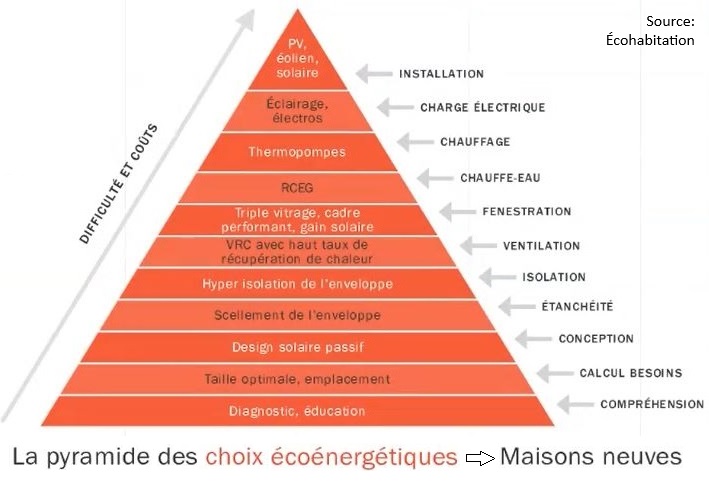
Setting priorities based on your budget.

Is your project next?
Let’s talk about your site and your needs.
(819) 324-6294 · info@ag3-ac.com
Mon. to Fri. 8 a.m. to 5 p.m. · Sat. and Sun. on request